15 Female National Heroes in Indonesia
Etymologically the word "hero" comes from the Sanskrit "phala", which means result or fruit. According to the Big Indonesian Dictionary, a hero means someone who has courage and sacrifice in defending the truth for the nation, state and religion or a brave warrior.
National Hero is the highest award title in Indonesia. This posthumous title or title given to people who have died is given by the Government of Indonesia as a real act that is very meritorious and exemplary for the community.
From the presidential decree, there are 159 Indonesian heroes and 12 of them are female national heroes, including:
1.Cut Nyak Dhien – Aceh
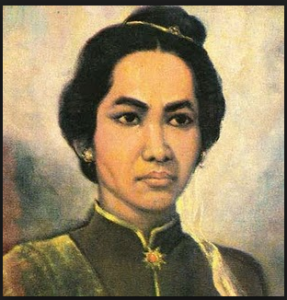
Cut Nyak Dhien is one of the Indonesian women's national heroes who was born on Tuesday, 0-1-1848 in Lampadang, Aceh. Cut Nyak Dhien comes from a religious noble family who is a direct descendant of the Sultan of Aceh, namely Teuku Nanta Seutia, an uleebalang VI Mukim.
At the age of 12, in 1862, his parents married Teuku Cek Ibrahim Lamnga, the son of uleebalang Lamnga XIII and they had one son.
The period of struggle against the Dutch
On March 26, 1873, the Dutch declared war on Aceh and began firing cannon fire at the mainland of Aceh. On April 8, 1873, the Dutch took control of the Baiturrahman Grand Mosque and burned it and the area of VI Mukim was successfully occupied by the Dutch which eventually made her husband, Teuku Ibrahim fight to seize the area of VI Mukim.
But unfortunately Teuku Ibrahim died in the war at Gle Tarum, June 29, 1878, this made Cut Nyak Dhien angry and vowed to destroy the Netherlands and continue his husband's struggle to lead the war. After Cut Nyak Dhien became a widow, Teuku Umar, one of the Aceh fighters, asked him to be his wife and partner in the struggle because he was very impressed with the spirit of Cut Nyak Dhien, they married in 1880 and had a child named Cut Gambang.
Together with Teuku Umar, Cut Nyak Dhien rebuilt strength and raised the morale of Aceh's struggle against the Dutch in a number of places, they were both a husband and wife who were dangerous to Dutch rule in Aceh.
But fate said otherwise, on February 11, 1899 Teuku Umar was found dead in the war and made Cut Nyak Dhien's troops weaker due to continuous pressure from the Dutch. In addition, Cut Nyak Dhien's physical condition and health continued to decline until the Dutch finally caught him in Beutong Le Sageu. To avoid Cut Nyak Dhien's influence on Aceh, the Dutch exiled him to Sumedang.
End of life
Cut Nyak Dhien who was old and had vision problems managed to attract the attention of the prisoners and the regent of Suriaatmaja in his exile, some of the clerics who were detained with Cut Nyak Dhien realized that she was a Muslim woman who was an expert in Islamic religious knowledge, so she was dubbed the "Mother of Perbu". "
Cut Nyak Dhien's activities had a great influence in Sumedang, he taught Islam and kept his identity a secret as a daughter of the sultan from Aceh. On November 6, 1908, Ibu Perbu died. Cut Nyak Dhien was recognized by President Soekarno as a National Hero of Indonesia through Presidential Decree No.106 of 1964 on 2 May 1964.
2. Cut Nyak Meutia – Aceh
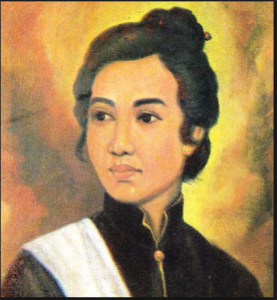 Cut Nyak Meutia is a national hero from Aceh who was born in Keureutoe, Pirak, North Aceh 1870. She is known as a woman who has a high fighting spirit and a strong determination to repel
Struggle Time
Cut Nyak Meutia against the Dutch with her husband, namely Teuku Muhammad or better known as Teuku Tjik Tunong. They were husband and wife as well as partners in the solid struggle against the Dutch. Until finally in March 1905, Teuku Tjik Tunong was arrested by the Dutch and sentenced to death on the shores of Lhokseumawe. Before he died, he left a message to his friend Pang Nagroe to marry his wife and take care of his child.
According to her late husband's message, Cut Nyak Meutia married Pang Nagroe and joined forces led by Teuku Muda Gantoe to fight the Dutch. But unfortunately, on September 26, 1910 Pang Nagroe died in the battle against the Marechausee Corps in Paya Cicem. Cut Nyak Meutia managed to survive with the other women and fled into the forest.
End of life
After the death of her second husband, Cut Nyak Meutia continued to fight against the Dutch along with her followers. They tried to attack and seize colonial posts all the way to Gayo through the jungle. However, during the battle in Alue Kurieng on October 24, 1910, a bullet was shot and declared dead. For all his services, the government awarded him the title of National Hero of Indonesia based on the Presidential Decree No. 107 of 1964 on May 2, 1964. His heroic story also fueled the spirit of the Indonesian people in fighting the G30S/PKI 1965 incident .
3. Raden Ajeng Kartini – Jepara
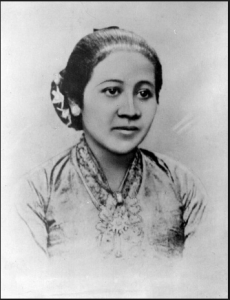
Raden Ajeng Kartini is a female fighter from Jepara who is very famous in Indonesia. She is known as a woman who is persistent in fighting for women's emancipation. Kartini was born in Jepara, April 21, 1879. Her birthday is commemorated as Kartini Day, to honor all her services to the Indonesian nation.
Kartini is a descendant of a noble family, her father is RM Sosroningrat who served as regent of Jepara. His mother is MA Ngasirah, the son of a kiai in Telukawur, Jepara City. Kartini received education until the age of 12 at ELS (Europese Lagere School). After the age of 12, Kartini had to stay at home because she could be secluded.
Struggle Time
Kartini felt a lot of discrimination between men and women, where she and other women could not continue their education to a higher level, there were even some women who were not allowed to get an education at all. During her seclusion, Kartini liked to write letters to her correspondent friends from the Netherlands, one of whom was Rosa Abendanon. Kartini was interested in the progress and mindset of European women after reading a lot of European books, newspapers and magazines. Kartini's desire arose to promote indigenous women like European women, because at that time indigenous women were in a low social status.
End of life
On November 12, 1903, at the age of 24, his parents married the regent of Rembang, namely KRM Adipati Ario Singgih Djojo Adhiningrat and had one son, Soesalit Djojodhiningrat. Kartini died 4 days after giving birth to her first child.
Kartini's death did not end her struggle as a pioneer of women's emancipation, one of her themes in the Netherlands was, Abendanon collected all the letters that Kartini had sent to her friends in Europe. Abendanon recorded the entire letter and entitled Door Duisternis tot Licht which means "From Darkness to Light", published in 1911 in Dutch.
In 1922, Balai Pustaka published a translated version of this book from Abendon with the title "Habis Gelap Terbitlah Terang: Buah Fikiran" with Malay dangers. Several translations in other languages were also published, so that no one would forget the history of RA Kartini's struggle during her lifetime. For his struggle, the government awarded the title of National Hero of Indonesia to RA Karini based on the Decree of the President of the Republic of Indonesia No. 108 of 1964 on May 2, 1964.
4. Raden Dewi Sartika – West Java
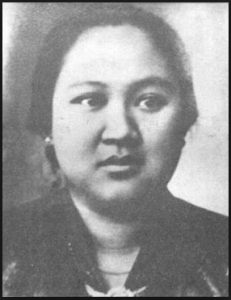 Raden Dewi Sartika, is one of the pioneers of education for women. He was born in Bandung, December 4, 1884 to Raden Somanegara and Raden Ayu Permas.
Struggle Time
She started her struggle at the age of 18 by teaching reading, writing, cooking and sewing to the women in her town. On July 16, 1904, Raden Dewi Sartika founded Sakola Istri or Sakola Perempuan. In 1904, Sakola Istri changed its name to Sakola Keutamaan Istri and in 1929, Sakola changed its name again to Sakola Raden Dewi.
In addition to being spread in the city of Pasundan district, Raden Dewi School also spreads outside Java. Dewi Sartika tries hard to educate the girls so that one day they can become good, intelligent, flexible, skilled housewives and will be able to stand on their own in the future. To cover the school's operational costs, Dewi Sartika is trying to find donations of funds and moreover there are many parties who support her struggle, especially her husband, Raden Kanduruan Agah Suriawinata.
Dewi Kartika's name is widely known by the public as an educator, especially among women. On January 16, 1939, the Dutch East Indies government awarded Dewi Sartika a star for her services in advancing the education of women.
End of life
Dewi Sartika breathed her last in Tasikmalaya, September 11, 1947. For her struggle in educating the nation, she was given an honorary title as a National Hero of Indonesia, on December 1, 1966.
5. Martha Christina Tiahahu – Maluku
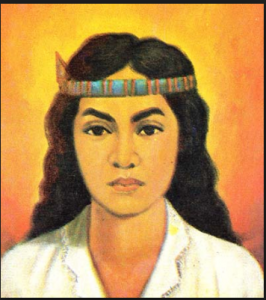 Martha Christina Tiahalu is a female warrior who was born in Maluku, January 4, 1800. Christina is the daughter of Kapitan Paulus Tiahahu, who also participated in the Patimura war against the Dutch in 1817.
Struggle Time
Since childhood, Martha often followed her father in meetings for the formation of fortifications, when she was 17 years old, Martha had the courage to fight against the invaders.
Martha Christina also acted as the leader of the female fighters to accompany the male fighters in the mission to seize the Dutch territory in the village of Ouw, Ulath, Saparua Island. Richemont, a Dutch role leader was killed by Martha Cristina's troops. With the death of the Dutch leader, the invaders became increasingly angry and continued to attack the Moluccan people so that the Moluccan troops were defeated. As a consequence, Martha Christina's father was caught and sentenced to death.
Martha Christina also tried to free her father, but unfortunately she and the Maluku fighters were captured by the Dutch. Until finally, Kapitan Paulus Tiahahu died with the death penalty.
End of life
Furthermore, Martha Christina was sentenced and exiled to the island of Java. Until finally on January 2, 1818, Martha Christina died on the way to the island of Java and her body was simply thrown into the ocean. For her struggle and courage in fighting the invaders, Martha Christina was given an honorary title as a National Hero of Indonesia, according to the Decree of the President of the Republic of Indonesia No.012/TK/Year 1969, dated May 20, 1969.
6. Maria Walanda Maramis – Minahasa
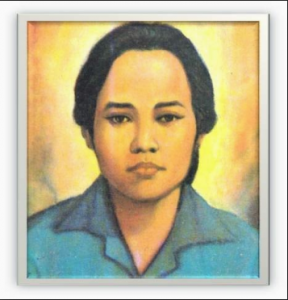 Maria Walanda Maramis is a women's movement that was born in Kema, North Sulawesi on December 1, 1872. Since the age of six, Maria Maramis has been an orphan and was raised by her uncle. Maria's education was only taken up to elementary school, because girls in Minahasa at that time were not allowed to receive higher education.
Struggle Time
Maria was able to expand her knowledge because she liked to associate with educated people, such as Reverend Ten Hove. Little Maria is determined to advance Minahasa women by getting adequate education, so that later they can take care of the household and educate their children well.
In 1890, Maria Maramis married Yoseph Frederik Calusung Walanda who was a teacher. With the help of her husband and other students, in July 1917 Maria Walanda Maramis founded an organization called Percintaan Ibu to Her Derived Children (PIKAT), which taught how to manage the household such as cooking, sewing, caring for babies and handwork.
PIKAT received a good response from the community, in a short time PIKAT branches were established in several places and donations of funds began to flow. Maria Maramis instills a sense of nationality in her students, by getting them used to school wearing regional clothes.
End of life
Maria Walanda Maramis died on April 22, 1924 in Maumbi. He received an honorary title as a National Hero of Indonesia for his struggle in educating the nation's generation in accordance with the Decree of the President of the Republic of Indonesia No. 012/K/1969 dated May 20, 1969.
7. Nyai Hj. Siti Walidah Ahmad Dahlan – Yogyakarta
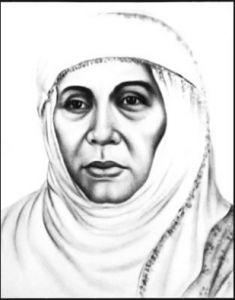 Siti Walidah or commonly known as Nyai Ahmad Dahlan, born in Yogyakarta in 1872, is a descendant of a family of Islamic religious leaders and the official head of the Keraton, Kyai Haji Fadhil. Since childhood, Siti Walidah did not receive a general education, except for the religious education she received from her parents.
Siti Walidah is married to her cousin, namely Kiyai Haji Ahmad Dahlan and has six children. After the marriage, he was known as Nyi Ahmad Dahlan. Kiyai Haji Ahmad Dahlan is a religious leader with revolutionary thoughts, and is often criticized and opposed for his conversion.
Struggle Time
Nyai Ahmad Dahlan has a broad view of knowledge, due to her proximity to Muhammadiyah figures and other national leaders as well as her husband's comrades in arms.
In 1914, Nyai Ahmad Dalam started the Sopo Tresno women's study group. Sopo Tresno became a women's organization based on Islam. Finally, the name Aisyah was chosen, as an Islamic organization for women on the night of Isra Mi'raj, April 22, 1917. Five years later, Aisyah officially became part of Muhammadiyah.
End of life
On May 31, 1946, Nyai Ahmad Dahlan died. To honor all of his services in spreading Islam and educating women, the government awarded Nyai Ahmad Dahlan an honorary title as a National Hero of Indonesia based on Presidential Decree No. 042/TK/1971.
8. Nyi Ageng Serang – Yogyakarta
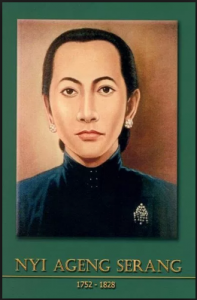 The owner's full name, Raden Ageng Kustiah Retno Edi, is a war strategist who was born in Serang 1752. Even though she is a woman, she is also capable of being a warlord. His father was Prince Natapraja, the Regent of Serang, Yogyakarta, also known as Panembahan Serang. Since childhood, Nyi Ageng Serang had a high sense of nationalism to expel the Dutch from the motherland.
Struggle Time
In the 19th century, the Dutch began to attack the land of Java and began to demean the Javanese kings and make the people's situation even more miserable because there was a lot of plundering of people's lands so that the Diponegoro war (1825-1830) also made Nyi Ageng Serang (age 73 years old) ) as an elder in the war.
Age did not prevent Nyi Ageng in the war, in fact he led his troops directly during the guerrilla war in Beku village, Kulon Progo district. The strategy adopted by Nyi Ageng in the war, made Prince Diponegoro appoint him as an advisor, on a par with Prince Mangkubumi and Prince Joyokusumo in war tactics.
End of life
Due to his physical weakness, Nyi Ageng finally resigned from the battlefield and settled in the Nataprajan family home in Yogyakarta until he died in 1828 at the age of 76 due to illness. For her services in defending the country, Nyi Ageng Serang was given the title of National Hero of Indonesia based on the Decree of the President of the Republic of Indonesia No. 084/TK/Year 1974, dated December 13, 1974.
9. Hj. Rangkayo Rasuna Said – Jakarta
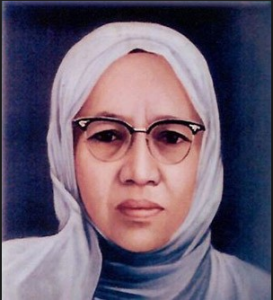 Hajjah Rangkayo Rasuna Said is a female fighter who is persistent in fighting for equal rights between men and women. Since childhood, Rasuna Said has received Islamic education in Islamic boarding schools and is interested in participating in political struggles. Then Rasuna Said defended his people by joining the Sarekat Rakyat as branch secretary. After that, he became a member of the Indonesian Muslim Association.
Struggle Time
Rasuna Said is considered a woman who has a critical way of thinking, which led to the Dutch government imprisoning her in 1932. In addition, she is also noted as the first woman to be sentenced to Speek Delict, which is a law from the Dutch government for anyone who speaks against the Dutch.
After Indonesian independence, Rasuna Said was active in the Indonesian Youth Information Agency and the Indonesian National Committee, sitting as the Sumatran Representative Council representing the West Sumatra region after the Proclamation of Independence and after that he was appointed as a member of the United States of Indonesia House of Representatives (DPR RIS). In 1959, Rasuna Said succeeded in achieving his political career as a member of the Supreme Advisory Council after a presidential decree 5 July 1959.
End of life
Rasuna Said served as a member of the Supreme Advisory Council until the end of his life, November 2, 1965 in Jakarta, leaving behind a daughter (Auda Zaschkya Duski) and 6 grandchildren (Kurnia Tiara Agusta, Anugerah Mutia Rusda, Moh. Ibrahim, Moh. Yusuf, Rommel Abdillah and Natasha). Quratul'Ain). For all his services, Rasuna Said was given an honorary title as a National Hero of Indonesia based on the Decree of the President of the Republic of Indonesia No. 084/TK/Year 1974 dated December 13, 1974.
10.Hj. Fatimah Siti Hartinah Suharto – Central Java
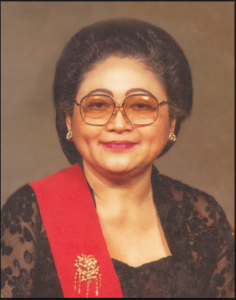 Hj. RA Fatimah Siti Hartinah or better known as Tien Suharto is the wife of the second President of Indonesia, General Retired Suharto. Tien was born in Jaten Village, Surakarta, Central Java on August 23, 1923 to KPH Soemoharjomo and RA Hatmanti Hatmohoedjo.
Since childhood, Tien has been accustomed to changing places of residence following his parents who were assigned to various regions, having lived in Jumapolo Solo, Matesih Gunung Lawu, Solo city and had studied at Holland Indlanche School for a year.
Struggle Time
After the Japanese entered the city of Sola, Tien also took a Japanese language course and joined Laskar Putri Indonesia, a women's organization that aims to serve the interests of the front and rear troops of the struggle.
At the age of 23, Prawirowihardjo's envoy who was Suharto's adoptive parent came to Tien's house to propose to him. Tien and Suharto married on December 26, 1947. Suharto, who was then a military officer, brought his wife to Yogyakarta for duty. On January 23, 1949, Tien gave birth to her first daughter, Siti Hardiyanti Hastuti.
Over time, Tien as a wife always supported and accompanied her husband, who became the central figure in the effort to disband the PKI. In 1967, through a special session of the MPRS, Suharto was appointed president, and Tien, who was a soldier's wife, has now been the president's wife for more than 30 years.
As Mrs. President, Tien is trying to fix the state palace which was once a relic of the Dutch era, changed to be softer by highlighting Indonesian characteristics, such as adding furniture with teak carvings from Jepara, installing paintings by Indonesian painters to changing the colors of the buildings to brighter. One of Tien's contributions to this day is always remembered for his idea to build the Beautiful Indonesia Miniature Park (TMII) which until now has become an icon for the Indonesian nation.
End of life
After approximately 47 years of accompanying President Suharto, on April 28, 1966 at Gatot Subroto Hospital, Siti Hartinah breathed her last due to a heart attack. For all his services, Tien was given an honorary title as a National Hero of Indonesia.
11. Hj. Fatmawati Soekarno – Bengkulu
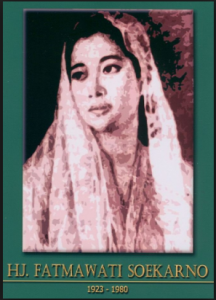 Fatmawati is an indigenous woman who was born in Bengkulu, February 5, 1923 to Hassan Din and Siti Chadijah whose parents are both descendants of Puti Indrapura (the royal family of the Indrapura sultanate, Pesisir Selatan, West Sumatra). Fatmawati's father is one of the Muhammadiyah figures in Bengkulu.
When she was 20 years old, Fatmawati married the First President of Indonesia Soekarno on June 1, 1943. Which made Fatmawati automatically become the first First Lady of Indonesia from 1945-1967. Fatmawati is Soekarno's third wife, who has five children, namely Guntur Soekarnoputra, Megawati Soekarnoputri, Rachmawati Soekarnoputri, Sukmawati Soekarnoputri and the last Guruh Soekarnoputra.
Struggle Time
After marriage, Fatmawati accompanied her husband to Jakarta to play an active role and join other national fighters for Indonesian independence. Even Soekarno as the leader of the fighters, always asked Fatmawati for opinions and considerations regarding the steps of her struggle.
On the eve of independence, on August 15, 1945 Fatmawati with a reflective spirit while carrying her first child, Moh. Guntur, who was still a baby, left the city of Jakarta for Rengasdengklok following Soekarno, Hatta and several PETA members.
In addition, Fatmawati as the First Lady of Indonesia is well known as a woman who was instrumental in sewing the Sang Saka Merah Putih flag which was hoisted at the first ceremony of the Proclamation of Indonesian Independence, on August 17, 1945 to be exact.
End of life
On May 14, 1980, at the age of 57, Fatmawati died of a heart attack in Kuala Lumpur, Malaysia. Currently, Fatmawati's name is used as the name of a hospital in Jakarta and a name for an airport in Indonesia, precisely in Bengkulu, where she was born. The struggle of Mrs. Fatmawati since before independence and after independence, was recognized by the Central Government, through Presidential Decree No.118/TK/2000 dated November 4, 2000 as a National Hero of Indonesia.
12. Opu Daeng Risaju – South Sulawesi
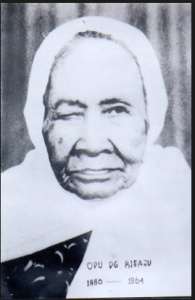 Opu Daen Risaju or familiarly known as Famajjah as a child is a National Hero who was born in Palopo in 1880 from the couple Opu Daeng Mawellu and Muhammad Abdullah to Barengseng. The name Opu Daen Risaju is a symbol of the nobility of the Luwu kingdom, a title obtained after marrying her husband, H Muhammad Daud.
Since childhood, Opu Daeng Risaju has never attended a formal school like a Dutch school. However, I have learned a lot about religion and culture. Even though he is illiterate, he understands the Qur'an, Fiqh, Nahwu Sharaf and balaghah because he lives in an aristocratic environment that applies moral values and behavior.
Struggle Time
In 1927, Opu became interested in entering a political organization by becoming a member of the Pare-Pare branch of the Indonesian Islamic Sarekat Party. Because of his activities, he was elected as chairman of the PSII Tanah Luwu Region, Palopo Region, on January 14, 1930. During his leadership at PSII, Opu made religion his foundation and received great support from the people.
The Dutch restrained Opu from continuing his struggle at PSII, because the Dutch did not want Opu to get a lot of popular support. The Dutch together with Controleur Afdeling Masamba considered that Opu had incited the people to distrust the government. Finally, Opu was tried and dethroned and imprisoned for 14 months in 1943.
End of life
During the Revolution, Opi was active again with the youth of South Sulawesi to fight NICA who wanted to colonize Indonesia. Because of his bravery against NICA, Opu became a fugitive from the Dutch in South Sulawesi and eventually tortured Opu until he became deaf and was made an outside prisoner. Opu breathed his last on February 10, 1964. For all his services, Opu Daeng Risaju was given an honorary title as a National Hero.
Great Woman From West Sumatra
1. Rohana Kudus
Rohana Kudus is a multitalented woman who pioneered the emancipation of women, such as RA Kartini. Rohana Kudus is a teacher, founder of a women's school, writer, entrepreneur and also editor-in-chief of various women's newspapers. Rohana Kudus, besides being known as an influential woman in West Sumatra, also speaks three foreign languages, namely Latin Arabic, Malay Arabic and Dutch.
2. Rahmah El Yunusiyah
Rahmah El Yunusiyah is a female cleric from West Sumatra. One proof of her struggle that still exists today is the Padang Panjang Putri Diniyah College. She was also the first woman to receive the title of Sheikh from Egypt's Al-Azhar University, in 1957.
3. Siti Manggopoh
Siti Manggopoh was a female figure who was greatly feared in the pre-independence era. Siti Manggopoh is famous for daring to fight against Dutch economic policies through money taxes (belasting). The belasting regulations made by the Dutch were considered contrary to Minangkabau customs, because the land belonged to the Minangkabau people. As a result of his resistance, the Belasting War occurred on June 16, 1908 which overwhelmed the Dutch and the Minangkabau troops managed to kill 53 soldiers guarding the fort for a ploy arranged by Siti Manggopoh.
written by Adara Primadia